A gallery wall is a great way to showcase your favourite photographs, artwork and meaningful memories while adding personality to your home. Whether you want to display family portraits, travel photographs, prints or a combination of different pieces, a well-designed gallery wall can become a standout feature in any room.
However,
creating a gallery wall that looks balanced involves more than simply hanging pictures together. The right combination of frame sizes, colours, spacing and placement can make the difference between a cohesive display and one that feels cluttered. With a little planning, you can create a gallery wall that complements your interior and reflects your personal style.
1. Choose a Focal Point for Your Gallery Wall
Before selecting your frames, decide where you want your gallery wall to sit and what you want it to achieve. Popular locations include the living room, hallway, bedroom, staircase or home office.
Consider the surrounding furniture and features. A gallery wall above a sofa, for example, should generally relate to the width of the furniture beneath it rather than appearing too small or extending too far beyond its edges. Similarly, a display in a hallway may benefit from a horizontal arrangement that follows the shape of the space.
Choose a focal point to help guide the layout. This could be a larger family photograph, a favourite piece of artwork or a distinctive framed print. Placing this piece near the centre of the arrangement can help anchor the display, although an asymmetrical layout can also work when the other frames are arranged thoughtfully.
2. Mix Frame Sizes Without Overcrowding the Wall
Using different frame sizes is one of the easiest ways to create visual interest. A combination of large, medium and small frames can make a gallery wall feel more natural and less uniform.
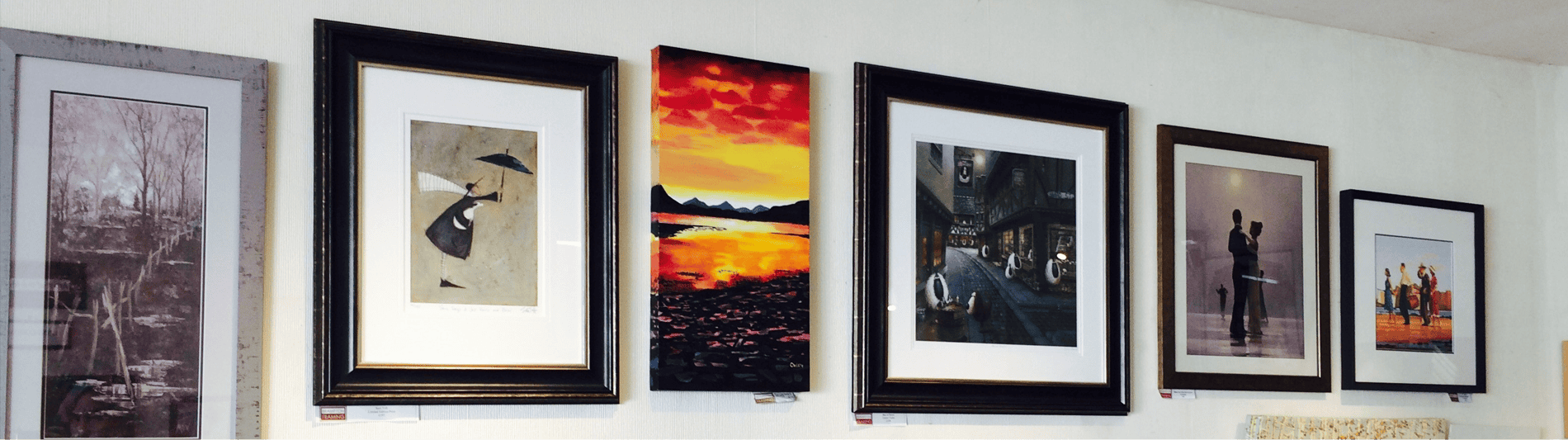
Start with one or two larger pieces, then arrange smaller frames around them. This creates a sense of hierarchy and helps guide the eye across the display. If every frame is the same size, the result can look structured and formal, which may suit some interiors. However, varying the sizes often creates a more relaxed and personalised appearance.
The key is to distribute the visual weight evenly. Avoid placing all the largest frames on one side unless you are deliberately creating an asymmetrical design. Instead, balance larger pieces with smaller frames elsewhere on the wall.
You can also experiment with portrait and landscape orientations to introduce variety while keeping the overall arrangement cohesive.
3. Maintain Consistensy with Frame Colours and Styles
Your choice of frames plays a vital role in how balanced the finished gallery wall looks. Even when displaying different types of artwork, consistent framing can help bring everything together.
Black frames can create a modern, defined appearance, while
white frames often suit light, minimalist interiors.
Timber frames can introduce warmth and complement natural materials, while
gold or silver frames may add a more decorative finish.
You do not necessarily need to use identical frames throughout your display. Combining different styles can look effective when there is a common element connecting them, such as a similar colour, finish or profile.
For example, a gallery wall featuring black and timber frames can feel cohesive when the colours are repeated throughout the arrangement. If you prefer a more eclectic look, keep the artwork connected through a shared colour palette or theme.
4. Plan Your Spacing Before Hanging Anything
One of the most common mistakes when creating a gallery wall is inconsistent spacing. Frames that sit too close together can make the arrangement feel crowded, while large gaps can make the display appear disconnected.
As a starting point, aim for approximately 5–8 centimetres between frames. You can adjust this depending on the size of the wall, the dimensions of your artwork and the overall look you want to achieve. The most important thing is to keep the spacing reasonably consistent throughout the display.
Before putting holes in the wall, lay your frames on the floor and experiment with different arrangements. Alternatively, cut paper templates to match each frame and temporarily attach them to the wall. This allows you to test the layout, adjust the spacing and see how the pieces work together before committing to a final design.
Step back regularly to assess the arrangement from a distance. Looking at the display as a whole will help you identify gaps, crowded areas or frames that seem out of place.
5. Create Balance Through Colour and Subject Matter
A balanced gallery wall does not have to be perfectly symmetrical. Instead, it should feel visually connected, with colours, shapes and subject matter distributed in a way that makes sense.
If you are displaying
family photographs, consider using similar tones or editing styles to create a consistent appearance. For
artwork, you might select pieces that share complementary colours, themes or artistic styles.
You can also combine different types of images, such as photographs, illustrations and decorative prints. To make the collection feel intentional, repeat certain colours throughout the arrangement or use similar matboards to connect the different pieces.
Think about visual weight as well. A dark photograph or bold artwork can draw more attention than a lighter image of the same size. Distributing these stronger pieces across the wall can help prevent one area from feeling heavier than the rest.
6. Consider Height and Overall Shape
The height of your gallery wall can influence how it fits into the room. As a general guide, artwork is often hung so the centre of the overall arrangement sits around 145–155 centimetres from the floor. However, this is only a starting point, and the ideal height depends on your ceiling, furniture and viewing position.
When hanging a gallery wall above a sofa or console, leave enough room between the furniture and the bottom of the frames so the display feels connected without appearing cramped.
Pay attention to the overall shape, too. A rectangular arrangement can create a neat, structured look, while an organic layout with varied frame positions can feel more casual. Whichever approach you choose, consider the outer edges of the display and how they relate to the surrounding wall.
7. Choose Quality Frames for a Cohesive Finish
The right frames help protect your photographs and artwork while contributing to the overall appearance of your gallery wall. Selecting suitable sizes, finishes and matboards can make individual pieces look more polished and help the entire arrangement feel connected.
At Just Picture Framing Online, you can explore framing options to suit different photographs, artwork and interior styles. Whether you prefer classic timber, elegant metallic finishes or a clean, contemporary look, choosing frames that complement your images can help bring your gallery wall together.
Before ordering,
measure your artwork carefully and consider whether a
matboard would improve the presentation. A matboard can introduce breathing space around an image, making it stand out while helping maintain consistency across frames of different sizes.
Contact Just Picture Framing Online
Creating a balanced gallery wall is all about combining thoughtful planning with personal style. By considering frame sizes, spacing, colours and placement before hanging your artwork, you can create a display that feels cohesive without sacrificing individuality.
If you are planning a gallery wall and need help choosing suitable frames for your photographs or artwork,
contact Just Picture Framing Online for more information. Explore the available framing options and find a combination that helps you create a gallery wall you will enjoy for years to come.




Leave a Reply